

This article is for general information only and does not constitute personal financial or investment advice. Property values and rental income can fall as well as rise, and past performance is not a reliable indicator of future results. You should seek independent financial advice before making any investment decision.
According to Savills, approximately 2.9 million homes within the private rented sector will require upgrades to meet future minimum EPC requirements.
Here’s what landlords need to know.
What is an EPC and why does it matter?
An Energy Performance Certificate (EPC) measures a property’s overall energy efficiency and environmental impact. The rating is scored on a scale of 1 to 100 and graded from A (most energy efficient) to G (least energy efficient). The assessment considers both the building fabric and its fixed building services, such as heating, lighting, and hot water systems. It also provides recommendations for improving the property’s energy performance, helping to reduce energy consumption, lower running costs, and minimise carbon emissions.
An EPC is a legal requirement whenever a property is newly constructed, sold, or let. Certificates remain valid for up to 10 years unless a new EPC is commissioned following improvements to the property that improve its energy efficiency. With current standards, a property must be a minimum of EPC E before it can be legally let, with upcoming reforms these standards are projected to be stricter.
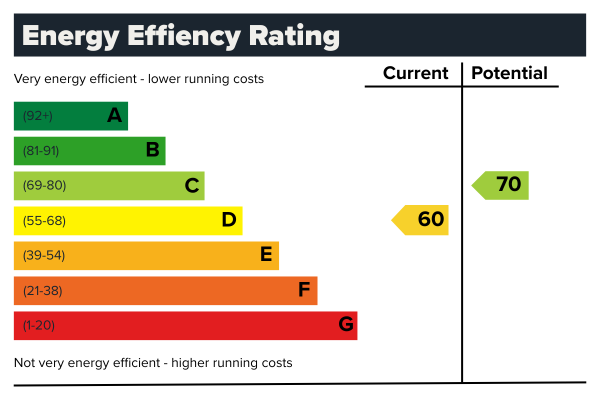
EPC ratings have a significant influence on the property market, particularly in light of rising energy costs, as there is an increasing emphasis on improving energy efficiency to reduce household running costs. In line with the UK’s ambition to achieve net zero carbon emissions, higher EPC ratings are becoming increasingly important, with an A or A+ rating representing the highest standard of energy performance. Furthermore, proposed government reforms are expected to raise minimum energy efficiency standards over time. According to a Legal & General report, 62% of UK households consider investing in energy-efficient homes to be attractive in response to the rising cost-of-living crisis.
Understanding the latest EPC reforms
October 2025
The government begins recognising eligible expenditure on energy efficiency improvements towards the £10,000 cost cap exemption for landlords. This enables property owners to invest in improvements while contributing towards the exemption threshold where applicable.
2027
The Home Energy Model (HEM) is introduced as the new methodology for assessing the energy performance of buildings. During this transition period, the HEM will operate alongside the existing Standard Assessment Procedure (SAP), providing a phased introduction to the revised assessment framework.
2029
The Home Energy Model becomes the mandatory methodology for producing Energy Performance Certificates, replacing the existing assessment system for all new EPCs.
1 October 2030
All privately rented properties will be required to achieve a minimum EPC rating of C, replacing the current minimum requirement of E. Landlords who fail to meet the new standard, unless a valid exemption applies, may be unable to legally let their properties.
Although the implementation dates for several proposed EPC reforms remain under review, the full transition timetable has yet to be confirmed. Existing EPCs are expected to remain valid until their expiry, provided they continue to comply with the regulations that were in force at the time they were issued. Once the revised assessment methodology becomes mandatory, all new Energy Performance Certificates will be produced under the updated framework.
For non-domestic properties, carbon emissions are expected to remain the primary measure of energy performance and regulatory compliance. However, further reforms are anticipated, with current government consultations proposing that commercial properties will be required to achieve a minimum EPC rating of B by 2030, although this has yet to be formally confirmed.
Alongside these regulatory changes, EPC ratings must now be displayed in property marketing materials and online listings. This provides prospective purchasers, tenants, and investors with greater transparency, enabling them to assess a property’s energy performance and likely running costs at a much earlier stage in the decision-making process.
Collectively, these reforms form part of the government’s wider strategy to reduce energy consumption, tackle fuel poverty, support households facing rising living costs, and progress towards the UK’s net zero carbon emissions target. According to government estimates, buildings are responsible for around 20% of the UK’s greenhouse gas emissions, making improvements to the energy efficiency of the built environment a key component of the country’s decarbonisation strategy.
The financial benefits of improved energy efficiency are also significant. The House of Commons Library estimates that around 13% of households in England are living in fuel poverty. In addition, Rightmove reports that, as of July 2026, the average monthly energy cost for a three-bedroom semi-detached property with an EPC rating of D is approximately £202, compared with around £87 for a similar property with an EPC rating of B. These figures demonstrate the substantial savings that higher energy efficiency standards can deliver, reinforcing the case for continued reform while helping to reduce financial pressures on lower-income households.
What the EPC reforms mean for landlords and investors
Energy Performance Certificate regulations heavily influence property values, shaped by mortgage viability, renters’ rights regulation and buyer demand for energy-efficient properties.
Mortgage lenders often consider a property’s EPC rating when assessing its affordability, as energy-efficient homes typically have lower running costs. Properties with higher EPC ratings may be eligible for a green mortgage, which can offer benefits such as reduced interest rates, or increased borrowing potential, depending on the lender. These incentives make investing into more energy efficient properties more viable. These products are commonly available for properties with an EPC rating of B or above, although eligibility criteria vary between lenders.
Comparatively, properties with lower EPC ratings are generally more expensive to heat and maintain, which can increase household expenditure. As a result, some lenders may take these higher running costs into account when assessing affordability, potentially affecting the amount that can be borrowed.
According to Savills, approximately 2.9 million homes within the private rented sector will require upgrades to meet future minimum EPC requirements. This challenge is largely driven by the age of the UK’s housing stock, with 71% of homes built before 1950 currently holding an EPC rating below C. The government estimates that the average cost of upgrading a property to achieve the minimum EPC C rating will be between £6,100 and £6,800. This is supported by a maximum cost cap of £10,000, with a lower cap applying where this represents 10% or more of a property’s value, helping to reduce the financial pressure placed on landlords. Further support is also available through schemes such as the Local Authority Warm Homes Grants and the Boiler Upgrade Scheme.
This creates an opportunity for investors to avoid simply diverting capital away from the property market and instead adopt smarter investment strategies that help future-proof their portfolios. While retrofitting older properties can result in substantial costs, focusing on new-build and off-plan opportunities provides access to assets that are already positioned to meet evolving energy efficiency standards, reducing the need for costly future improvements.
Investing in off-plan properties provides investors with exposure to developments constructed in line with the latest building regulations and energy efficiency standards. Developers are required to provide a Predicted Energy Assessment (PEA) for new-build properties, which is then replaced by a formal EPC rating once construction is complete. Due to modern construction methods, these properties are more likely to achieve higher EPC ratings through the use of advanced building materials, airtight construction techniques and integrated renewable technologies, such as solar panels.
Another property type to consider is Purpose-Built Student Accommodation (PBSA), which has become an increasingly attractive asset class due to its combination of strong tenant demand and modern construction standards. Most PBSA developments are purpose-designed with high levels of insulation, efficient heating systems and sustainable building materials, resulting in strong energy performance.
This reduces ongoing maintenance requirements and future compliance costs, while providing students with lower utility bills and a more comfortable living environment. As demand for high-quality student accommodation remains strong, PBSA offers investors both income stability and resilience against future energy efficiency reforms.
Learn the essentials of PBSA investing in just a few minutes with our factsheet.
As the Renters’ Rights Act and EPC reforms reshape traditional buy-to-let, landlords face growing responsibilities and costs. Download our free Purpose-Built Student Accommodation factsheet to explore a fully managed, income-focused alternative with no day-to-day landlord duties.
Specialist Supported Housing offers investors a further opportunity to future-proof their portfolios against evolving EPC regulations, with housing providers playing a key role in ensuring ongoing compliance and maintaining property standards. Many modern SSH developments are built or refurbished to meet current Building Regulations, incorporating features such as enhanced insulation, energy-efficient heating systems, LED lighting and sustainable technologies that contribute to stronger EPC ratings.
Housing providers typically undertake regular property assessments, planned maintenance programmes and energy efficiency improvements to ensure homes continue to meet regulatory requirements throughout the tenancy lifecycle. This proactive approach reduces the likelihood of properties falling below future EPC thresholds and minimises the requirement for significant reactive retrofit expenditure.
In addition, maintaining strong energy performance supports wider social objectives by reducing energy costs and improving living conditions for vulnerable residents. For investors, Specialist Supported Housing provides a resilient asset class by combining long-term demand, professional management and reduced exposure to the risks associated with future EPC reforms.
Turning EPC changes into property opportunities
The importance of EPC ratings within the property market is continuing to grow as energy efficiency becomes an increasingly significant factor for investors, landlords and homeowners. With regulatory reforms expected to introduce stricter energy performance requirements, EPC ratings are likely to have a greater influence on property values, investment decisions and ongoing compliance obligations. Properties with strong energy performance are expected to be better positioned to retain value, attract demand and minimise future improvement costs, while lower-rated properties may face increased financial and regulatory pressures.
As the regulatory landscape continues to evolve, investors and property owners should proactively assess their portfolios to understand potential exposure and identify opportunities to improve resilience. By considering energy efficiency alongside traditional investment factors, adopting forward-thinking strategies and prioritising assets that align with future standards, property portfolios can be better positioned to navigate upcoming reforms and maintain long-term performance.
Interested in understanding how EPC reforms could impact your investment strategy? Speak with our sales consultants today to explore opportunities and discover how you can future-proof your property portfolio.
Property Investment Resources
- Landlord Responsibilities: The Complete Guide
- Rental Yield Explained
- Student Property Investment Explained
The information in this article is for general guidance only and does not constitute personal financial or investment advice. Property values and rental income can fall as well as rise. Past performance is not a reliable indicator of future results. You should seek independent financial advice before making any investment decision.