

We’re often asked, “Do you have any properties in London?”
For a long time, the capital was viewed as the default location for property investment. However, recent figures show that it is no longer the only region attracting growth and significant investment.
In the year to June 2026, the North-west recorded the strongest house-price growth of any English region, with prices increasing by 4.7%. London, meanwhile, experienced a 2.5% fall, according to the UK House Price Index.
Public funding is also reaching northern city regions. In March 2026, the Government announced up to £1.7 billion in grant, loan and patient-capital funding for five northern regions. This included access to £175 million for Greater Manchester and £95 million for Liverpool City Region, as detailed by HM Treasury.
Manchester and Liverpool remain major investment destinations, but funding is also reaching surrounding towns. Greater Manchester’s first £400 million Good Growth Fund package includes projects across areas such as Stockport, Bolton, Oldham, Ashton-under-Lyne and Wigan, according to the Greater Manchester Combined Authority. Across the wider Liverpool City Region, investment continues in transport, housing, employment and infrastructure throughout its six boroughs, including St Helens, Wirral and Halton, as outlined by the Liverpool City Region Combined Authority.
This does not mean London is finished. It simply means that investors focusing solely on the capital may be overlooking other areas where regeneration and new infrastructure are being actively supported.
This article is for general information only and does not constitute personal financial or investment advice. Property values and rental income can fall as well as rise, and past performance is not a reliable indicator of future results. You should seek independent financial advice before making any investment decision.
Manchester
Manchester recorded a 19.7% increase in jobs over the decade to 2023, according to the Centre for Cities’ Big Cities Outlook 2026. This was above the 13.9% average across the UK. Alongside its employment base, Manchester offers an established retail, leisure and cultural economy, which contributes to its appeal as a place to live.
Transport and regeneration are also shaping the city region. Greater Manchester is set to receive £2.5 billion in transport funding between 2027 and 2032, supporting the continued development of the Bee Network. Manchester City Council also aims to deliver at least 36,000 homes by 2032.
Manchester’s average property price was £252,000 in July 2026, while average private rent reached £1,373 per month in August. This was 4.2% higher than a year earlier, according to the Office for National Statistics.
Manchester’s growing housing market also includes opportunities within the traditional buy-to-let sector. Here, factors such as employment, transport connections and local rental demand are particularly relevant. With the average private rent in Manchester reached £1,373 per month in August 2026, up 4.2% annually, according to the Office for National Statistics.
For investors, this shows a clear demand when it comes to traditional buy-to-let properties within Manchester. As areas face regeneration, driving employment and boosting infrastructure, there is a clear appeal for young professionals and families looking for properties withing this area.

Liverpool
Liverpool City Region has a £39.6 billion economy, with strengths across advanced manufacturing, health and life sciences, creative industries, technology and professional services. According to Invest Liverpool, its Life Sciences Investment Zone has the potential to attract £800 million in investment and create 8,000 jobs.
Regeneration and development also form an important part of the region’s growth plans. A new £2 billion Investment Fund is expected to support commercial, laboratory and industrial projects. Its first phase could unlock more than 520,000 sq ft of employment space and support over 2,800 jobs, according to the Liverpool City Region Combined Authority.
Liverpool’s housing market provides further context for why the city is being considered by property investors. The average property price was £189,000 in July 2026, an annual increase of 8.1%. Average private rent reached £913 per month in August 2026, representing annual growth of 5.6%, according to the Office for National Statistics.
Interest in Liverpool also extends beyond traditional buy-to-let property. Specialist Supported Housing responds to an identified need for suitable accommodation for people with additional care requirements. The National Housing Federation estimates that England will require at least 167,329 additional supported homes by 2040, highlighting the scale of the wider need for specialist housing provision.
Together, Liverpool’s economic activity, regeneration plans, housing market and requirement for suitable specialist accommodation help explain why some investors are researching the city for this type of property.
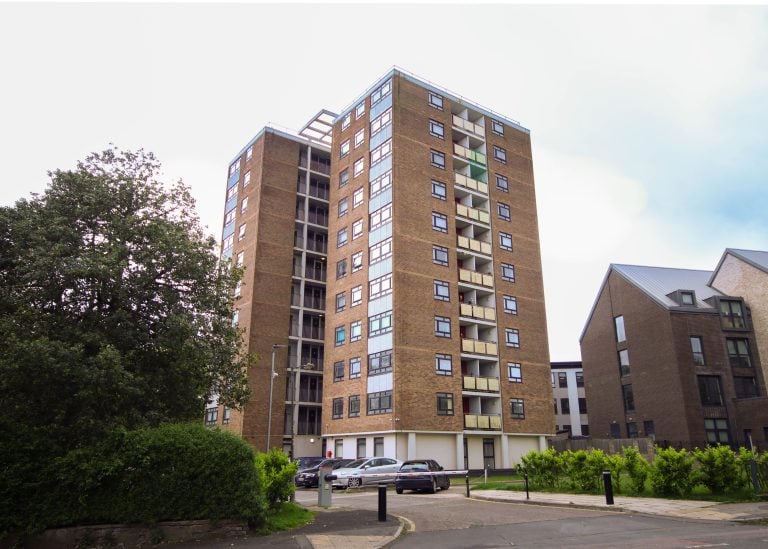
Our latest Specialist Supported Housing development, Belem Tower, is situated next to Sefton Park in Liverpool. Spanning 10 floors, the development will provide safe and suitable accommodation for people with specialist care needs, designed to support greater independence.
Nottingham
Nottingham’s two main universities continue to support a substantial student population. In 2025/26, the University of Nottingham and Nottingham Trent University had 53,888 full-time students studying within the city. Of these, an estimated 41,314 required accommodation.
Around 29,903 occupied PBSA beds were recorded during the same academic year. This left at least 11,411 students living in private houses or flats. However, student accommodation requirements have fallen from their 2022/23 peak, partly due to changing enrolment and more students commuting from home.
Nottingham’s wider housing figures also provide useful context. The average property price was £190,000 in July 2026, while average private rent reached £1,014 per month in August, according to the Office for National Statistics.
Within the PBSA sector, the type, location and management of each development are especially important. Nottingham City Council reported an overall PBSA vacancy rate of 12.7% in 2025/26, although 43% of surveyed schemes recorded vacancy rates of 5% or less. Supported by being home to two major universities the demand for student bed spaces is well established. According to research by Savills, the average student to available bed ratio in the UK is 2.7. Measured by the demand and supply in student markets, covering both available beds offered by universities or private providers.
Our latest PBSA student development, Antibo House, is positioned right in the heart of Nottingham City Centre. Surrounded by Nottingham’s cultural hubs, access to public transport and universities within walking distance. This new development offers students high-quality modern living in an established student market within Nottingham.

Three cities with three different stories
Manchester, Liverpool and Nottingham each have a distinct property-market story. Manchester has experienced employment growth alongside infrastructure investment. Liverpool’s landscape is being shaped by regeneration and economic development, while Nottingham’s large student population plays an important role in its accommodation market.
The significance of these trends varies between property types. Traditional buy-to-let, Specialist Supported Housing and PBSA serve different occupier groups and operate in different ways.
Citywide data therefore provides useful context for investors when considering where they want to invest, and in what type of property.
Are you interested in learning more about our investment opportunities? Our team is ready to talk with you!
The information in this article is for general guidance only and does not constitute personal financial or investment advice. Property values and rental income can fall as well as rise. Past performance is not a reliable indicator of future results. You should seek independent financial advice before making any investment decision.