
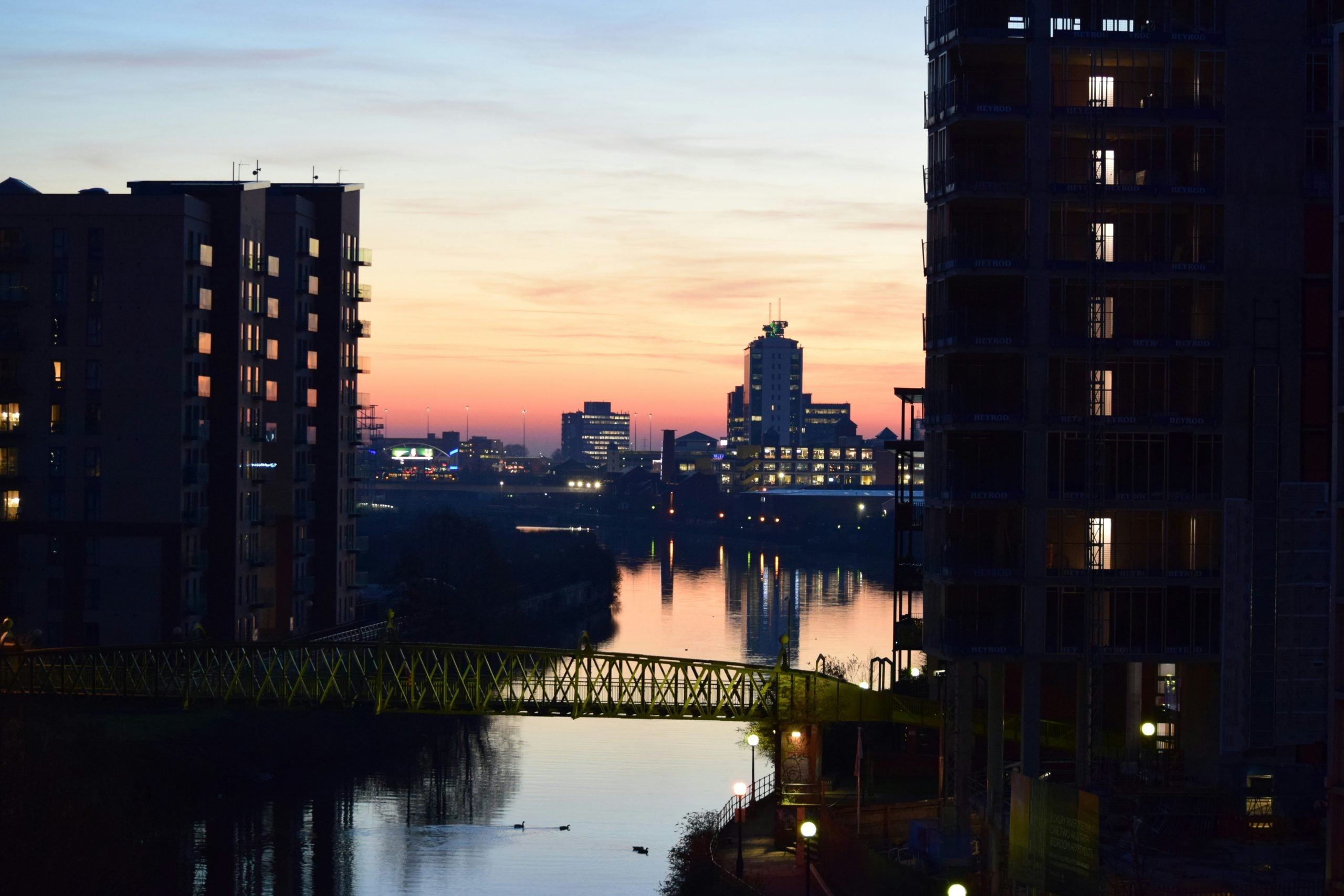
The past two years in UK regional cities have been defined by cranes, hoardings and planning applications. In contrast, 2026 marks the critical shift to operation.
This is the year stadiums open, business districts welcome their first major tenants, and transport hubs finally connect. For UK property investors, this transition from “in construction” to “in use” is the specific moment where rental premiums and yield compression crystallise.
Urban regeneration is often misunderstood as a simple aesthetic improvement. It’s actually a fundamental restructuring of local economies that reshapes tenant demand.
It alters the risk profile of specific postcodes and creates new value anchors in previously overlooked districts. Understanding exactly where and when these projects reach maturity is essential for capitalising on the resulting uplift.
This report analyses the national landscape of UK regeneration as it matures in 2026. It examines specific operational milestones in cities including Manchester, Liverpool and Sheffield. It also addresses how national policy shifts, such as Freeport tax sites and Inheritance Tax changes, will influence investment returns in the year ahead.
At Knight Knox, we’ve spent over 20 years identifying these shifts before they become obvious to the wider market.
Our focus remains on high-yield, off-plan opportunities in the specific regional pockets where this infrastructure delivery is imminent. We prioritise locations where public and private investment is visibly converting into tenant demand.
Jump to Section
- What is Urban Regeneration and Why Does It Matter for Investors?
- UK Regeneration In 2026: The National Picture For Investors
- How Urban Regeneration Projects And Schemes Drive Value In 2026
- National 2026 Drivers Reshaping Regeneration Returns
- What This Means For Property Investors In 2026 And Beyond
- Urban Regeneration FAQs
What is Urban Regeneration and Why Does It Matter for Investors?
Urban regeneration is the process of improving a specific city area through new construction, economic investment and environmental upgrades.
It differs from standard development because it improves underused or declining districts to stimulate new long-term economic activity.
The definition of urban regeneration includes infrastructure improvements, the creation of public spaces and the delivery of mixed-use residential and commercial schemes.
For investors, the difference between “regeneration” and “redevelopment” is important. Redevelopment may simply replace one building with another. Urban regeneration reshapes the entire local market. It introduces new amenities that permanently increase the desirability of a postcode.
The significance of 2026 lies in the transition from planning to delivery. Rental values and property prices in regeneration zones typically experience their sharpest growth when assets become operational.
Tenants pay premiums for finished amenities rather than future promises. This means 2026 serves as a “maturation phase” for many key UK projects, validating the capital appreciation projected during the off-plan sales phase.
UK Regeneration Projects In 2026: The National Picture For Investors
The outlook for UK regeneration in 2026 is defined by the completion of major building projects. Projects approved after the pandemic are now ready to open. This changes the investment landscape. Growth is no longer based on future plans but on real, working buildings.
This shift is happening in both major and growing regional cities. The focus has moved beyond just building apartments. Now, the infrastructure that tenants need is being delivered. This includes new transport links, cultural venues and large green spaces.
Why 2026 Is The “Maturation Phase” For UK Regeneration Projects
2024 and 2025 were defined by construction activity. In contrast, 2026 is the operational year. This is when stadiums host their first full season of events, city centre parks open to the public and business hubs welcome their main tenants.
For the UK housing market, this change drives immediate improvements in rental demand and capital values.
Investors must recognise that the “regeneration premium” is easiest to secure just before these projects finish.
Once a scheme like a new football stadium or a city centre park opens, the surrounding property prices typically rise to reflect the new facilities. The opportunity in 2026 is to invest in these areas while the price reflects potential rather than the finished product.
| Category | Key Cities | 2026 Operational Focus |
| Tier 1 Priorities | Manchester, Liverpool, Nottingham, Sheffield | Major infrastructure delivery (stadiums, parks, bio-science hubs) driving immediate improvements in rental yields. |
| Tier 2 Growth | Newcastle, Huddersfield, Doncaster, Hull, Stoke-on-Trent, Leeds | Town centre improvements and new office hubs (such as HMRC) changing the type of tenants in the area. |
Manchester – Victoria North And City River Park
Manchester remains the benchmark for regional growth. The £4bn Victoria North masterplan represents the next significant phase in the regeneration of Manchester. While much of this project has been in the planning or early construction stages, 2026 marks a visible turning point for the area.
The critical milestone for 2026 is the opening of the first operational phase of the City River Park, known as St Catherine’s Wood.
This coincides with the delivery of the next residential phase at Red Bank, which includes 895 new homes. These events signal the transition of Red Bank from an industrial fringe location into a functioning residential neighbourhood.
For investors, the delivery of green infrastructure is a key value driver. The arrival of a high-quality public park transforms the desirability of adjacent schemes like Victoria Riverside.
Tenants are typically willing to pay a premium for park-side living, which supports higher rental values. As the area matures from a construction site into a “green living” destination, early investors are likely to see the strongest capital appreciation.
Liverpool – Everton Stadium, North Shore And Liverpool Waters
The focus of Liverpool regeneration in 2026 is the waterfront. The headline event is the first full calendar year of operation for the new Everton Stadium at Bramley-Moore Dock.
While the stadium has been hosting matches since the start of the 2025/26 season, 2026 is when the full schedule of non-matchday events, concerts and tourism solidifies.
This activity is expected to bring approximately 1.4 million visitors to the area annually. For property investors, this footfall establishes the “North Shore” as a viable rental market rather than a peripheral dockland.
The influx of visitors supports demand for short-term rentals, while the permanent workforce drives long-term tenant demand in adjacent residential developments.
The stadium is a catalyst for the wider Liverpool Waters masterplan. As the Central Docks area progresses, the connectivity between the city centre and the northern docks strengthens. Investors entering this market before the full operational impact of the stadium is priced in may find favourable yields in L3 and L5 postcodes.
Nottingham – The Island Quarter And Student-Led Regeneration
Regeneration in Nottingham is anchored by The Island Quarter, one of the largest mixed-use developments in the East Midlands. The first phase delivered the Binks Yard and Cleaver & Wake hospitality venues in 2022, establishing a new canal-side destination for the city.
The 693-bed Winfield Court PBSA scheme completed in 2024, bringing a significant new student population into a previously underused postcode. That influx has already reshaped the local micro-market, increasing footfall and rental demand in the surrounding area.
Further phases covering hotel, build-to-rent apartments and commercial space are in the pipeline, though delivery timelines remain subject to market conditions. For investors, the combination of an established student population and ongoing development activity positions this corridor as one to watch.
Sheffield – West Bar And Castlegate
Sheffield enters a dual phase of maturity in 2026 across both commercial and public amenity spaces. The £300m West Bar mixed-use scheme reaches a critical operational milestone.
By 2026, the No.1 West Bar Square office building will be fully tenanted, bringing approximately 6,000 workers into the area daily. This provides a ready-made professional tenant base for local Build-to-Rent and private rental stock.
Simultaneously, the historic Castlegate regeneration is scheduled for completion in late 2026. This project includes the new Sheffield Castle Park and the de-culverting of the River Sheaf.
For property investors, this is comparable to a “Hyde Park effect.” The transformation of a derelict market site into a high-quality green public space instantly lifts the desirability of bordering neighbourhoods like Wicker Riverside, supporting premium rental values.
Newcastle – Pilgrim’s Quarter And The HMRC Hub
Newcastle is undergoing a significant shift in its professional landscape. The focal point for 2026 is the Pilgrim’s Quarter development, creating a new regional hub for HMRC. While construction has been ongoing, 2026 is the critical year for tenant fit-out and occupation.
This project involves the relocation of approximately 9,000 HMRC staff into the city centre. For investors, this mass movement of professional workers creates immediate demand for high-quality rental stock.
We expect this to place specific pressure on the supply of 1 and 2-bedroom apartments in the city centre, driving rental growth as the workforce settles into the new site.
Huddersfield – Our Cultural Heart And Town-Centre Repositioning
Huddersfield is repositioning itself as a primary commuter hub for the Leeds City Region and Greater Manchester. The catalyst for this change is the Our Cultural Heart masterplan. Summer 2026 marks a key milestone with the opening of Phase 1, which includes a new Food Hall and Library.
This opening validates the wider regeneration strategy led by Kirklees Council. It replaces declining retail space with modern leisure amenities.
For property investors, this improves the liveability of the town centre. It strengthens the case for Huddersfield as a high-value commuter satellite, offering lower entry prices than Leeds or Manchester but with improving local infrastructure.
Stoke-On-Trent – The Goods Yard And New Rental Benchmarks
Stoke-on-Trent has traditionally been viewed as a secondary investment market. The completion of The Goods Yard in 2026 challenges this perception. While the pedestrian link opened in 2025, 2026 is the year the residential and commercial elements of this £60m scheme reach full operational maturity.
Developed by Capital&Centric, this project introduces a design-led, station-adjacent neighbourhood that sets a completely new benchmark for the city.
For investors, the arrival of high-specification apartments in this location creates a new ceiling for local rental values. It attracts a demographic of young professionals who previously struggled to find suitable stock in the area, driving comparable yield improvements across the wider North Staffordshire market.
Leeds – Aire Park And The South Bank Neighbourhood
The regeneration of the South Bank in Leeds is one of the largest projects in Europe. The focal point is Aire Park, which enters a major activation phase in 2026. The year will see the park hosting significant events as part of the “City of Maths 2026” programme, alongside the occupation of key commercial buildings.
This transition is vital for property investors. It cements the South Bank as a genuine residential neighbourhood rather than a construction zone.
As the park becomes a functional green space and the commercial units fill with tenants, the area becomes a primary destination for city-centre living. This operational shift supports long-term tenant retention and capital growth for the residential phases currently under construction.
How Urban Regeneration Projects And Schemes Drive Value In 2026
Successful urban regeneration projects follow a predictable pattern. The “planning phase” offers growth based on potential.
The “construction phase” often keeps local rents lower due to noise and disruption. The “operational phase,” which many UK regeneration projects enter in 2026, is where the real value for buy-to-let investors appears.
This value becomes real in three specific ways when regeneration schemes move from building sites to functioning neighbourhoods:
#1 – Lower Risk and Higher Demand
As a regeneration area finishes construction, the investment becomes safer. Big institutional investors and cautious buyers typically wait until projects are finished before they buy.
This wave of new money drives property prices up. For early investors who bought off-plan, this is the moment their asset increases significantly in value. 2026 represents the moment this risk disappears in locations like Liverpool’s North Shore or Sheffield’s West Bar.
#2 – Better Quality Tenants
City regeneration does more than improve how a place looks. It changes who wants to live there. The completion of high-quality urban regeneration examples, like modern offices or tech hubs, attracts professionals with higher salaries.
Similarly, new university campuses attract international students with higher budgets. This allows landlords to target tenants who can pay more, securing higher rents and reducing the time the property sits empty.
#3 – The “Lifestyle” Premium
Rental values in regeneration areas are often limited by the surrounding environment during construction. Once the public spaces are complete, parks open, streetlights installed, and retail units occupied, the “lifestyle” premium takes effect.
Tenants pay for the convenience and look of the area, not just the apartment itself.
National 2026 Drivers Reshaping Regeneration Returns
While local milestones drive specific city markets, two major national shifts will influence the wider investment landscape in 2026. These policy changes create a unique set of conditions for capital deployment, affecting everything from land availability to commercial tenant demand.
Freeport Tax Site Activity
The government has extended the time to claim tax reliefs in English Freeports, such as the Liverpool City Region and East Midlands, until 2031.
However, 2026 remains a critical turning point. Many of the business plans approved in 2023 and 2024 will start operating in 2026 to maximise their five-year business rates relief window.
This means the theoretical “job creation” figures seen in brochures will become actual employment roles.
For property investors, this drives tenant demand in the residential areas near these zones. The arrival of logistics and manufacturing workers creates a strong baseline for rental demand in the surrounding boroughs.
Inheritance Tax (IHT) Changes
From 6 April 2026, new rules regarding Agricultural Property Relief (APR) and Business Property Relief (BPR) come into force.
A new £1 million cap on 100% tax relief will apply to combined agricultural and business assets, with 50% relief applying to values above this threshold.
For the property market, this policy change may trigger the sale of development land or older asset portfolios.
Landowners may choose to sell properties or sites to unlock cash before the tax changes fully take hold. This could result in a temporary increase in supply, potentially allowing sophisticated investors to buy renovation projects or land sites below their long-term market value.
The Infrastructure Boost: Liverpool Baltic
Transport projects usually see property values rise at two distinct moments: once when construction starts and again when it finishes. Early 2026 marks the scheduled start of construction for the new Liverpool Baltic station.
Historically, the moment spades hit the ground is when local property values begin to price in the future benefits. Investors entering the Baltic Triangle market in 2026 can secure assets before this value is fully realised when the station opens in late 2027.
What This Means For Property Investors In 2026 And Beyond
2026 represents a clear dividing line for regional property investment. The period of high construction activity is ending in key cities like Manchester, Liverpool and Sheffield. It is being replaced by a period of operational delivery.
For the buy-to-let investor, this phase offers a specific window of opportunity. The price increases that happen when a major regeneration scheme opens have not yet fully occurred across the wider city market.
Prices in cities like Newcastle, Sheffield and Liverpool still reflect their development status rather than their future status as premium, amenity-rich locations.
Crucially, investors do not need to buy inside a specific regeneration zone to benefit. The delivery of a major project like an HMRC hub or a new stadium creates a ripple effect across the entire city. It brings thousands of new workers and residents who need high-quality accommodation within a 20-minute commute.
The best strategy is to identify the cities that are contractually committed to these 2026 delivery dates and enter the market while capital values are still in their growth phase.
By securing stock in these high-growth regional centres now, investors can position themselves to capture the tenant demand and value uplift that these mature regeneration projects will generate.
At Knight Knox, we specialise in identifying these high-potential regional markets before they reach mass-market maturity. To view currently available investment opportunities in these cities, view our latest properties. Alternatively, contact the team to discuss your requirements.
Urban Regeneration FAQs
How do mortgage lenders view off-plan properties in regeneration zones?
Lenders generally view regeneration areas favourably because the infrastructure investment reduces long-term risk. However, the timing of your application is critical. Most mortgage offers are valid for three to six months, meaning you should typically apply closer to the 2026 completion date rather than at the point of exchange.
A significant advantage for investors in 2026 will be the final valuation. Lenders value the property at the time of completion, not the time of purchase.
If the regeneration scheme has successfully driven up local values during the build period, the property may be worth significantly more than the contract price. This can lower your Loan-to-Value (LTV) ratio and potentially give you access to better interest rates.
What happens if a project scheduled for 2026 is delayed?
Construction timelines can shift due to supply chain or weather issues. To mitigate this risk, all compliant off-plan contracts include a “Long Stop Date.”
This is a legally binding backstop date. If the developer fails to complete the property by this specific deadline, you are entitled to withdraw from the purchase and receive a full refund of your deposit.
Experienced investors often view minor delays in a rising market as a benefit rather than a drawback.
As you have exchanged contracts at a fixed price, any delay during a period of market growth simply means your asset continues to appreciate in value on paper before you are required to pay the final balance or arrange a mortgage.
Is it better to sell immediately upon completion in 2026 or hold?
While “flipping” (selling immediately after completion) can generate a quick profit, it rarely captures the full value of urban regeneration. The “operational phase” described in this report usually requires three to five years to fully mature.
This period allows the new demographic of tenants to settle, local amenities to bed in and the wider neighbourhood reputation to improve.
Selling in 2026 means you capture the uplift from the construction phase but miss the secondary “gentrification” growth. For maximum returns, we typically recommend holding the asset through the first full cycle of the regeneration zone’s operational life.
Do student property or residential property benefit more from regeneration?
Both sectors gain value, but in different ways. Student property tends to deliver higher immediate rental yields because the “regeneration” often involves a direct influx of students to a new campus or facility. The value driver here is the immediacy of demand.
Residential property often sees stronger long-term capital growth. As a regeneration zone matures and becomes a desirable “destination” with coffee shops, parks and transport links, it begins to attract owner-occupiers.
This secondary market of buyers helps to push up resale values over the medium term, offering a robust exit strategy for investors.
Browse expert-led investment advice
- Property Investment for Beginners
- Rental Yield Explained
- Commercial Property Investment Explained
- Manchester Rental Market Guide
- Investing in UK Property From Overseas
- Buying Investment Property For Children

Rebecca Jackson began her property career at just 16 and has spent the past 13 years with Knight Knox, growing into her current role as Associate Director. Her journey has taken her around the world—hosting seminars, meeting clients face-to-face, and even taking part in a charity skydive—all while building a wealth of experience and strong client relationships.
Rebecca’s passion for property is personal. She loves helping clients build their portfolios and long-term wealth, and takes great pride in the longstanding connections she’s formed with both investors and colleagues over the years.